Main Prize
Belinda Yee
Proudly supported by The Tall Foundation
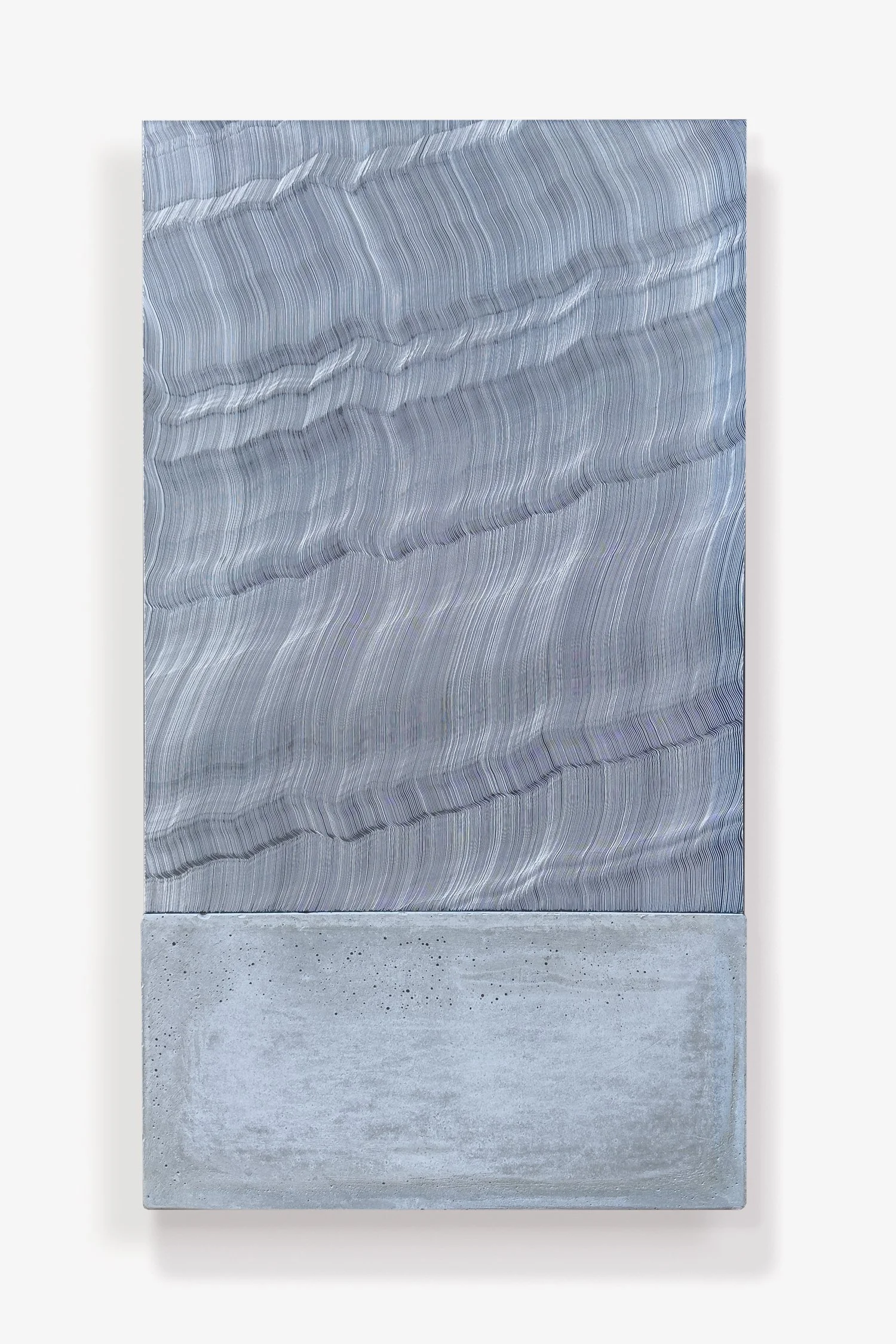
Belinda Yee, as if immersed, breath on skin, 2026, scratchboard, concrete, 56 x 3 1x 4cm. Image courtesy the artist.
I draw lines as an act of presence and resistance.
The work begins with a profile line from a sandstone escarpment I found lazily dropping into Sydney Harbour. I retrace the profile-line using my breath as a metronome to weave embodied time with slow geological scales of memory and becoming. While making the work I try to stretch memory beyond the horizon of lived duration to invoke a kind of remembering.
The repetition in the work speaks to change, to a generative difference. And there, within each line is the rhythm of my body, where pressure and speed register the corporeal. I can see it, my breath in the work, a rhythm that quietly builds within the line and across multiple lines.
Highly Commended
Kim Anderson
Proudly supported by Delta Cleaning
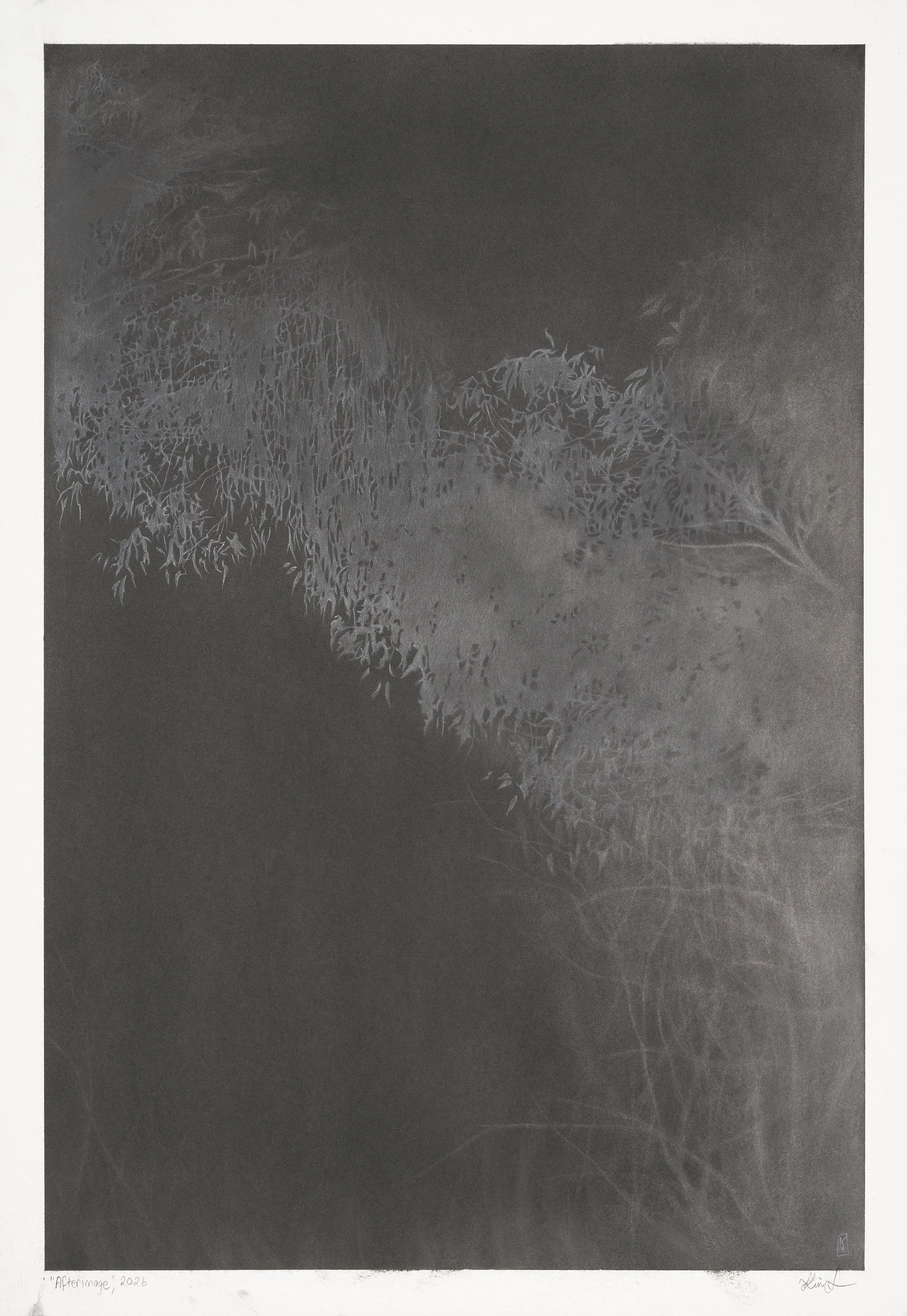
Kim Anderson, Afterimage, 2026, Bushfire charcoal, chalk and ash on paper, 60 x 40cm. Image courtesy of Brenton McGeachie
Kim Anderson applies the broader human experience of grief and mourning as a theoretical framework to examine climate-related loss, ecological grief, and solastalgia.
This drawing contains charcoal and ash collected from a fireground after the devastating January 9th bushfires that occurred on Dja Dja Wurrung country, a day of extreme heat, wind, smoke and apocalyptic skies. The gritty unforgiving quality of working with these mediums conjured up the destructive power of the inferno that reduced bushland and homes to ash. Making this work became a struggle between Anderson’s habitually meticulous drawing process, and the uncontainable forces of the natural world to which we are completely vulnerable.
The ghostly image of foliage is like an afterimage on the retina after a flash of bright light, and as the climate crisis escalates and engulfs us, all we may be eventually left with are smoke, ash and memories.
First Nations Artist Award
Natalie Bateman
Proudly supported by M16 Artspace
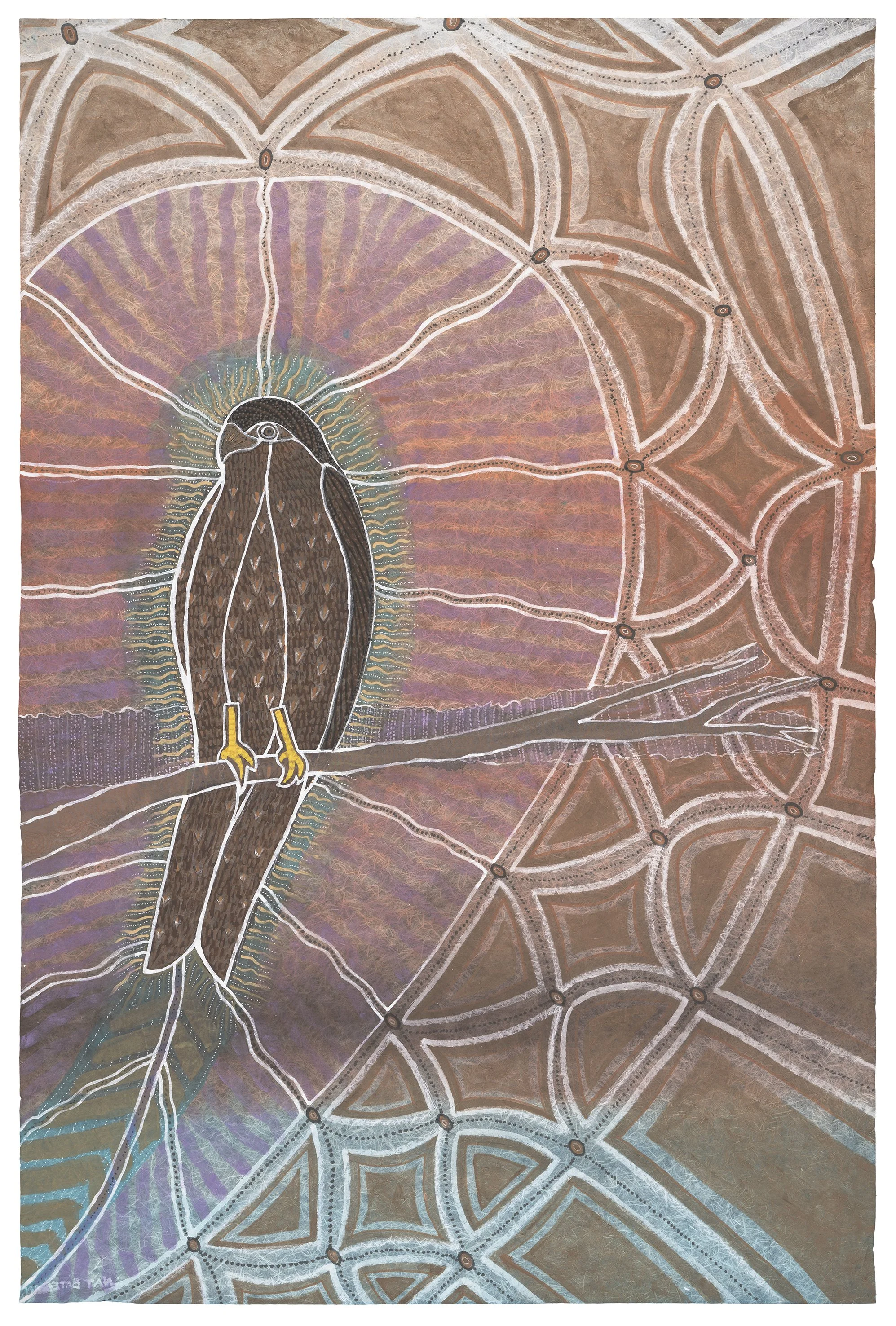
Brown Hawk Messenger Bird, 2026, Washi paper watercolours posca pens acrylic, 96 x 63cm. Image courtesy of Brenton McGeachie
Natalie Bateman is contemporary Yuin artist whose art practice is deeply connected to Country, ancestry, and cultural identity. With Walbanja-Yuin heritage, her work is informed by her family’s enduring connection to La Perouse, Maroubra Beach, and Gulaga on the Far South Coast of NSW.
Painting for more than three decades, Natalie creates vibrant works inspired by time spent on Country, translating the landscape through acrylic, watercolour, and Japanese inks. Her distinctive use of ancestral motifs, expressive colour, and organic forms reflects her deep respect for Country and celebrates the enduring strength of her culture.
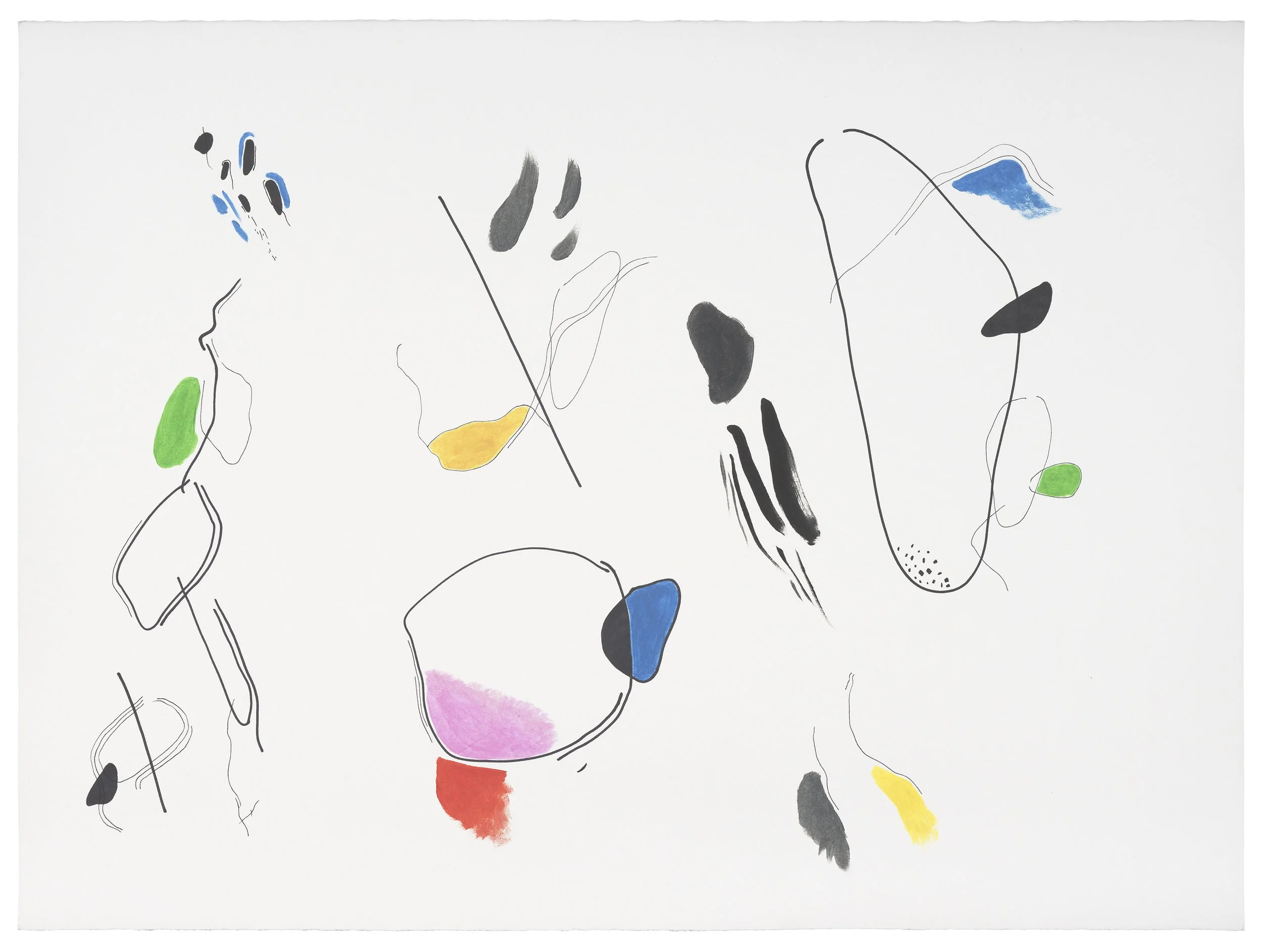
Jordan Rodger, Sea Cow, 2026, pen and acrylic on paper, 54cm x 77cm. Image courtesy of Brenton McGeachie
"It's a Sea Cow!"
The reaction from one of my children upon first seeing the work on the dining table. This sums up why I love abstract work and automatic drawing in particular, which continues to be the core focus of my practice. The viewer can use their imagination to interact with the drawing, following the gestures, shapes and forms to inform their experience.
All of my drawings begin in the same way. Once pen is put to paper, the mark making begins with a deliberate attempt to avoid considered figures and representations. This work has the more recent addition of acrylics, painted in the same automatic way, the initial drawing provides a framework for new organic shapes to develop.
"They're seeds"
"No, it's rain!"
"I think that one is toast"
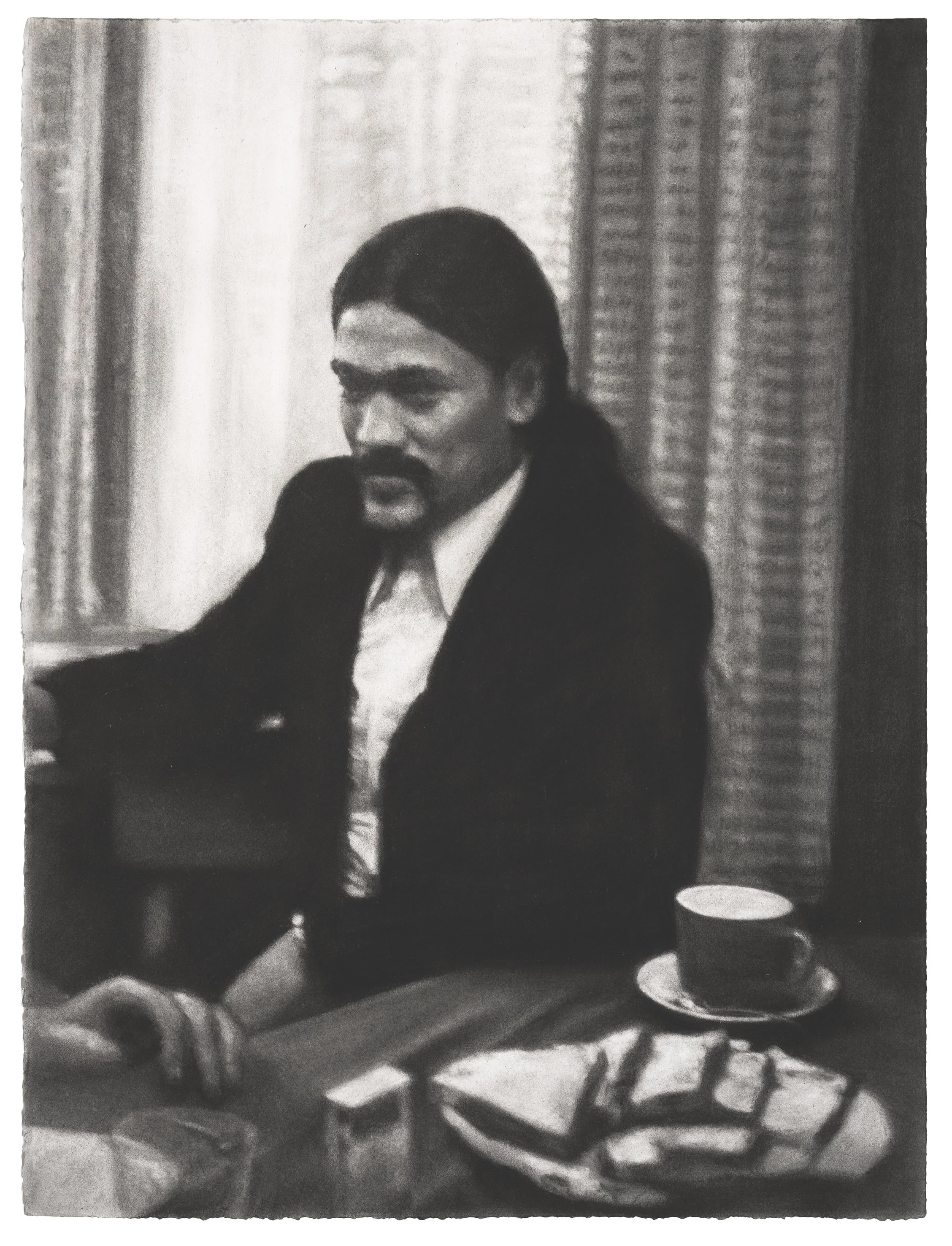
Surya Bajracharya, Purna Ratna Bajracharya, Melbourne, 1978, 2026, Charcoal, 76 x 56 cm.
Attending the funeral of my godfatherer, Frank Beormans, who firmly told me during the early years of my fatherhood, “I will not hear a bad word about your father” (Purna), I came across a black and white photograph of him I’d never seen.
It was in a much-loved photo album, sheathed behind a reflective, abraded and air-bubble-pocked mylar sleeve. The photo was taken before I was born during Purna’s first trip to Australia, where he, Frank and Margaret Fair (Mum) imported from Nepal, ornate buddhist statues and various handicrafts to the 1978 Royal Adelaide International Exposition, opened by Governor General, Sir Zelman Cowen. A very big event according to Purna.
I really wanted a copy of the photo and in the moment, shied away from asking if a reprint was possible and so attempted a discreet digital capture with my phone through all the previously mentioned mylar distortions. It was a poor effort to document but good enough to hold onto the general details and vibe of the original photograph.
Somewhere in the lacking details and wanting the original photograph, instead settling for a digital substitute, was in many ways analogous to my history and relationship with Purna. This inspired and informed my approach to drawing his portrait.