
Environment Artist Residency

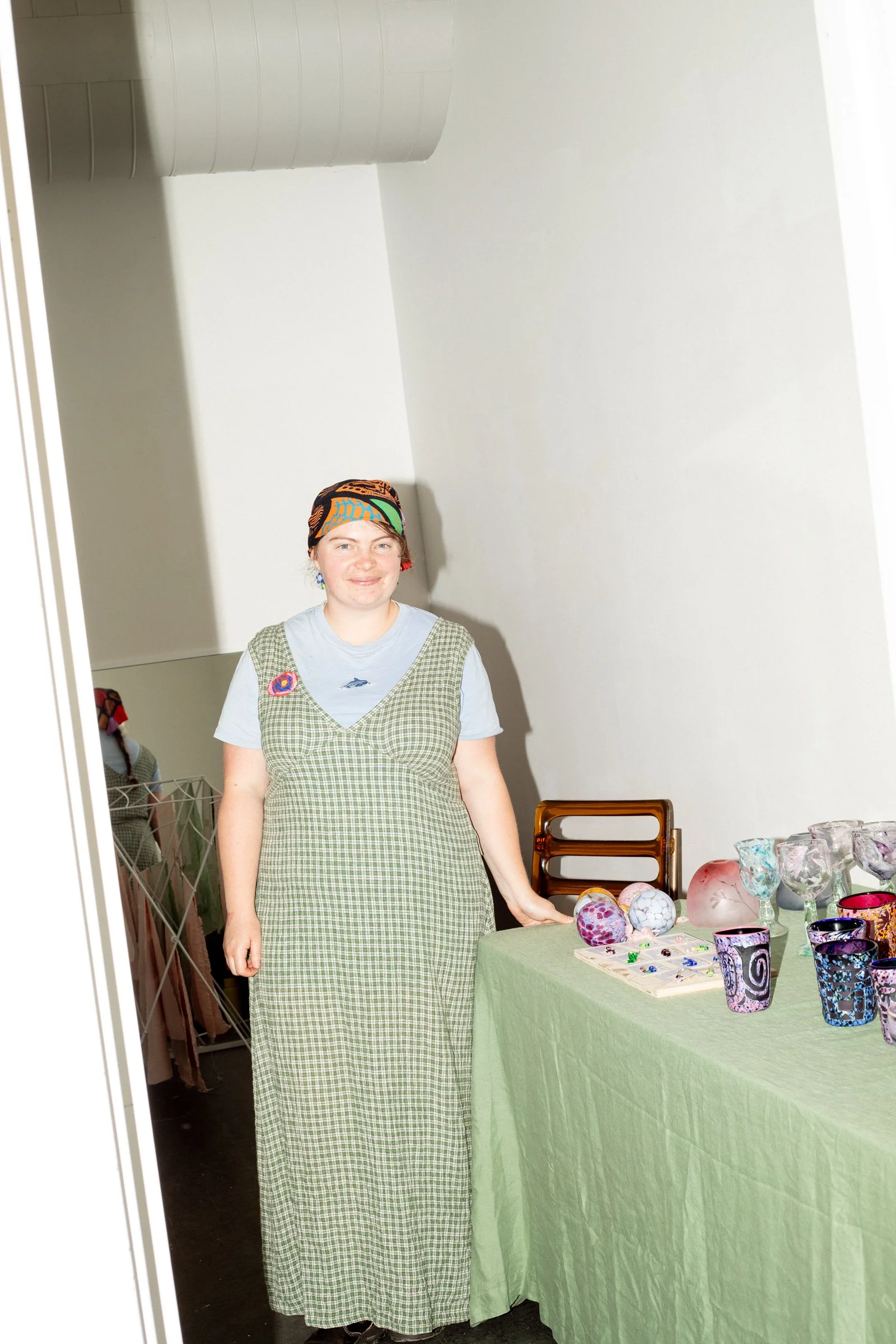
Olivia Gates by Lucy Chetcuti

Olivia Gates, 2026. Image courtesy of Cassie Abraham.

Olivia’s residency is possible in partnership with The Canberra Glassworks

Meet the artist

Olivia Gates is an artist working and living between Ngunawal / Ngambri Country (Canberra) and her hometown on Dharawal Country. Working primarily with glass, Gates’ work reflects spiralling internal dialogues around the contrasting impacts of her convict/settler lineage, both in generational connection to - and ongoing destructive colonial claims on place. She makes works that gently hold space for listening, with intention to open respectful dialogues of shared experience and revised histories. 

Gates graduated with a Bachelor of Visual Arts (Honours) / Bachelor of Design from the Australian National University in 2021. She has exhibited both locally and internationally and has acquired prizes recognising her work such as the Boronia Prize for excellence in glass, the Corning Museum of Glass / Australian National University School of Art and Design Partner Scholarship, and the Nigel Thomson Travel Grant.

During her residency, Gates intends to build upon recent learnings in printmaking processes, and how they can be integrated into her glass tool making practice. She endeavours to create cast tools from reclaimed CRT TV screens,which vary in colour from dense purples to a light aquamarine, and if not claimed for creative reuse, will be crushed down and integrated into road base. A small number of glass artists in the ACT region utilise this material in their work, diverting waste while gaining access to a free, local, and environmentally conscious alternative to imported raw materials.  Through this residency, Gates hopes to connect more artists and communities to this abundant and underutilised material.

Kirsten Wehner by Exhibitions

Environmental Artist Residency 2024


Kirsten Wehner, 2022. Image courtesy of Gemma Fischer

follow the artist @kirsten_wehner

Meet the Artist

Kirsten Wehner is an artist, curator and writer based in Canberra in Ngunawal Country.
Her practice explores people’s relationships with the more-than-human world, working across drawing, sculpture, installation and participatory experiences to generate cross-species empathy and care. Kirsten’s current research centres on waterways as places of cultural and ecological potential and on embodied methodologies for engaging with multi-species worlds. 
Kirsten has held residencies at the University of Canberra/Belconnen Arts Centre, the University of Sydney and the Rachel Carson Centre for Environment and Society in Munich. She has delivered experiences and exhibited in Australia and internationally. Kirsten is the James O Fairfax Senior Fellow in Culture and Environment at the National Museum of Australia, a co-director of the independent creative platform Catchment Studio, and serves on the governing committees of the Cad Factory and Plumwood Mountain. Recent projects include River Country, a public installation at the National Museum, the documentary, More than a Fish Kill and the publication, Living with the Anthropocene: Love, loss and hope in the age of environmental crisis (New South Books, 2020)

During her residency, Kirsten will continue her on-going research into conceptualising ‘sustainability’ as a process of community engaged creative regeneration grounded in the liveliness and agency of place. This is about exploring how people are transformed by places, even as they seek to shape and care for them, and how these engagements might open up new spaces for more-than-human cultural and ecological flourishing.
Kirsten will create a new body of work exploring Weston Creek, a largely unknown and little-loved waterway in suburban Canberra. Drawing on her recent learnings about the creek as Country, Kirsten will investigate the waterway’s experience as a channelised, buried and highly colonised entity, that nevertheless continues to call for connection. Kirsten’s project will focus on investigating how people along the creek are seeking to care for it and how the creek cares for them, responding to the materiality and actions of the waterway, its species and peoples.