
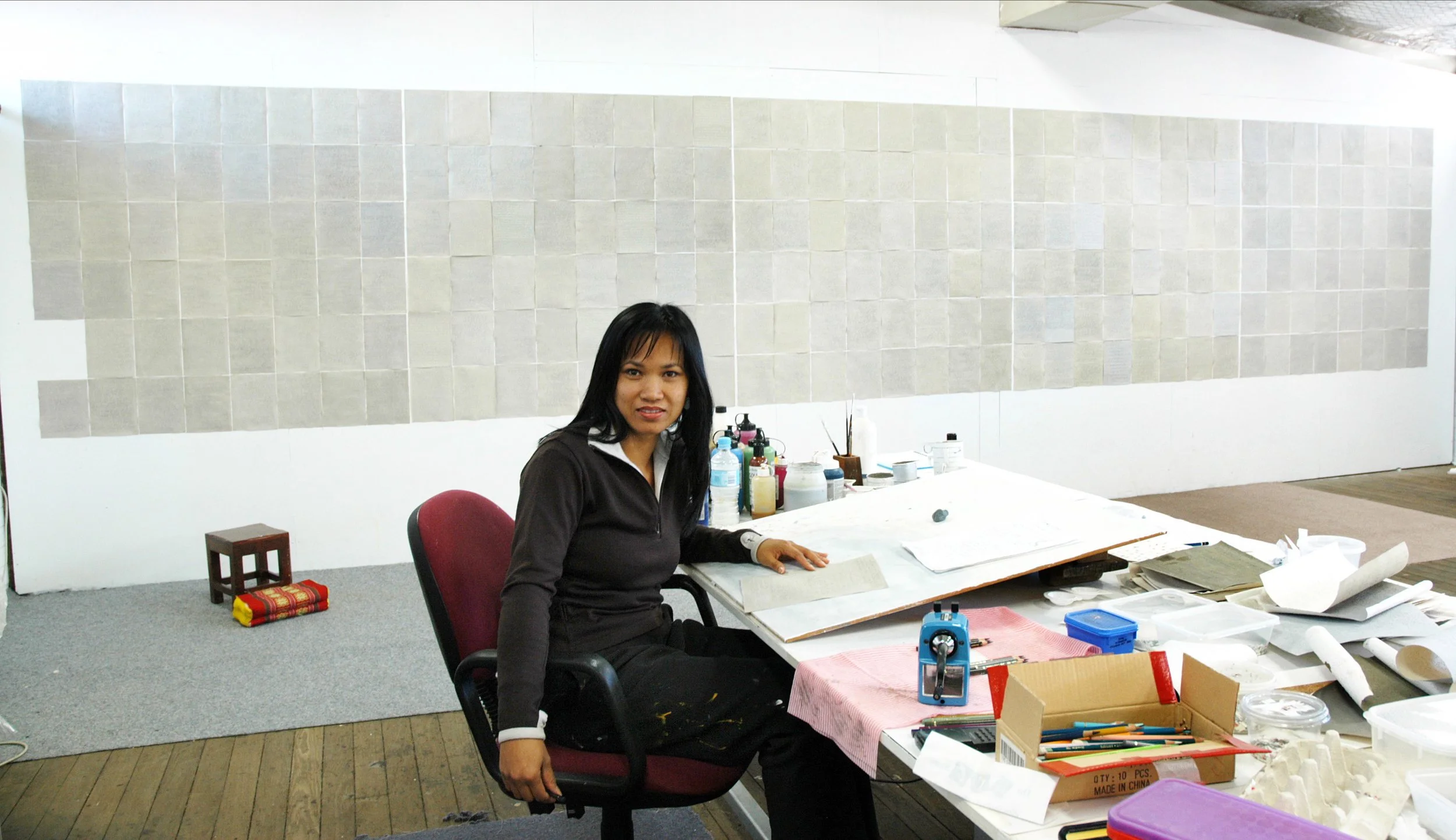
Image courtesy of the artist
For forty years, M16 Artspace has been a home for artists to create, connect, and grow. To celebrate this milestone, we’re not only hosting a fundraising raffle and exhibition, but also taking a walk down memory lane with some of the artists who’ve shaped our story. One of them is Savanhdary Vongpoothorn, a long-time friend of M16, who has generously donated an artwork to this year’s raffle.
In this conversation with our General Manager, Lucy Chetcuti, Savanhdary reflects on her early days in the Mildura Street studios in Fyshwick. She shares stories of chance discoveries, makeshift walls built by friends, and the kind of community spirit that gave artists space to dream bigger than they imagined. From dusty warehouse floors to creating work for the Sydney Biennale, Savanhdary’s memories remind us how much a studio can shape an artist’s journey.
Tickets for the M16 Artspace 40th Anniversary Fundraising Raffle are available here, with prizes drawn at our celebration event on Saturday 1 November 2025 at 7.30pm. Save the date!
LC: How did you come to have a studio at M16?
SV: We rented a beautiful house designed by Robin Boyd in Red Hill when we first moved to Canberra in 2004. The house was shaped like a lantern, and I used one of the bedrooms as a studio. After a few months the bedroom felt very small, and I was desperate to get a proper studio. I didn’t have a smart phone, and I rarely used the computer back then. So, one day I decided to go for a drive. I didn’t go very far until I saw a sign M16 Studios near Fyshwick Markets.
LC: So that was on Mildura Street?
SV: Yes, I drove in and met John Shone and Dr Srebrenka Kunek. They were living in their studio at the time, and they seemed to be the ones in charge. I was shown a huge space next to theirs and was told I could have as much space as I wanted. I decided then and there that I will take 60m square. I was so excited I rang a friend in Sydney, Roy Jackson (the late artist), he and another artist friend Christopher Bruce drove down to Canberra on their way camping and built me a wall with a door! They also helped me paint the walls. Also, there was a welder in the building across from us and I asked him if he could make me two big tables. And just like that I had a beautiful and functional studio with a sink and running water!
LC: Sounds like a dream studio!
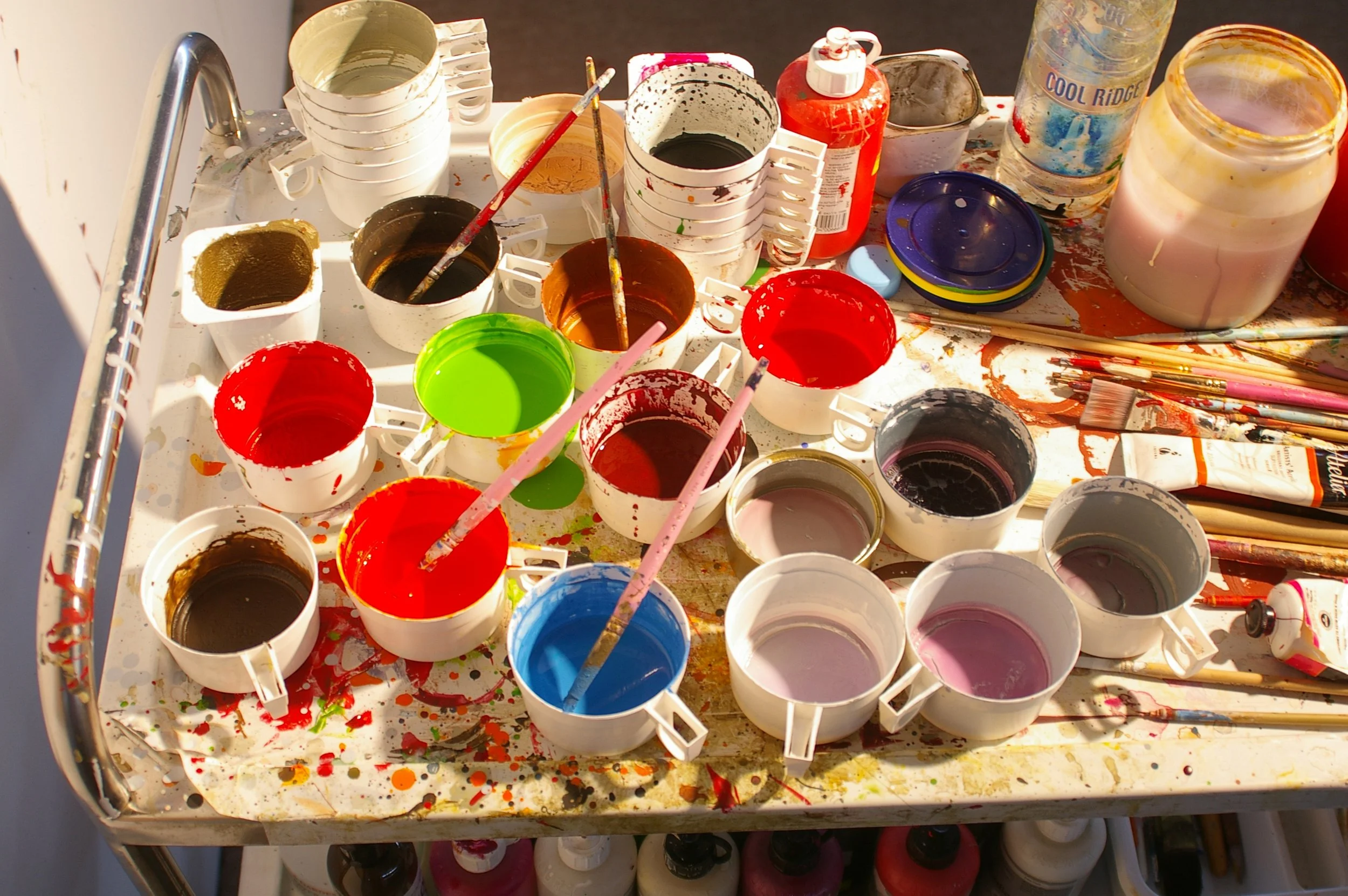
Image by Jenni Carter
SV: It was a dream studio, and I paid $250 a month for a few years! I left after five years of working there and Brett Bailey took over. That was when the rent had gone up.
LC: When you were making work out at the Mildura Street studio, were you showing with Martin Browne Contemporary?
SV: Yes, I was. I have done many shows out of that studio, including for Niagara Galleries in Melbourne as well as completed a major work for the Sydney Biennale in 2006.
LC: I can imagine you were really focused on your work during that period.
SV: I was, the fact that it was just down the road from the Robin Boyd house had made life easier and that was when I fell in love with Canberra.
LC: Wow, there's been some amazing people that have come through M16. When it first started it was in Kingston and called Kingston Art Space and was later renamed Leichhardt Street Studios when the organisation moved to Mildura Street. It's fascinating to me that over all these years it has held spaces for the Studio One printmaking workshop (now Megalo Print Studio), the Canberra Art Workshop (CAW), Helen Maxwell’s Girls Own Gallery, the Ben Grady Gallery and the Spiral Arm Gallery. I would love to do a Spiral Arm exhibition one day, what a great name!
I heard that the name M16 was chosen because it was 16 Mildura Street. I've been trying to dig through all the old files to get a sense of our history. Did you have much interaction with Jeffree Skewes? He was running children's art classes.
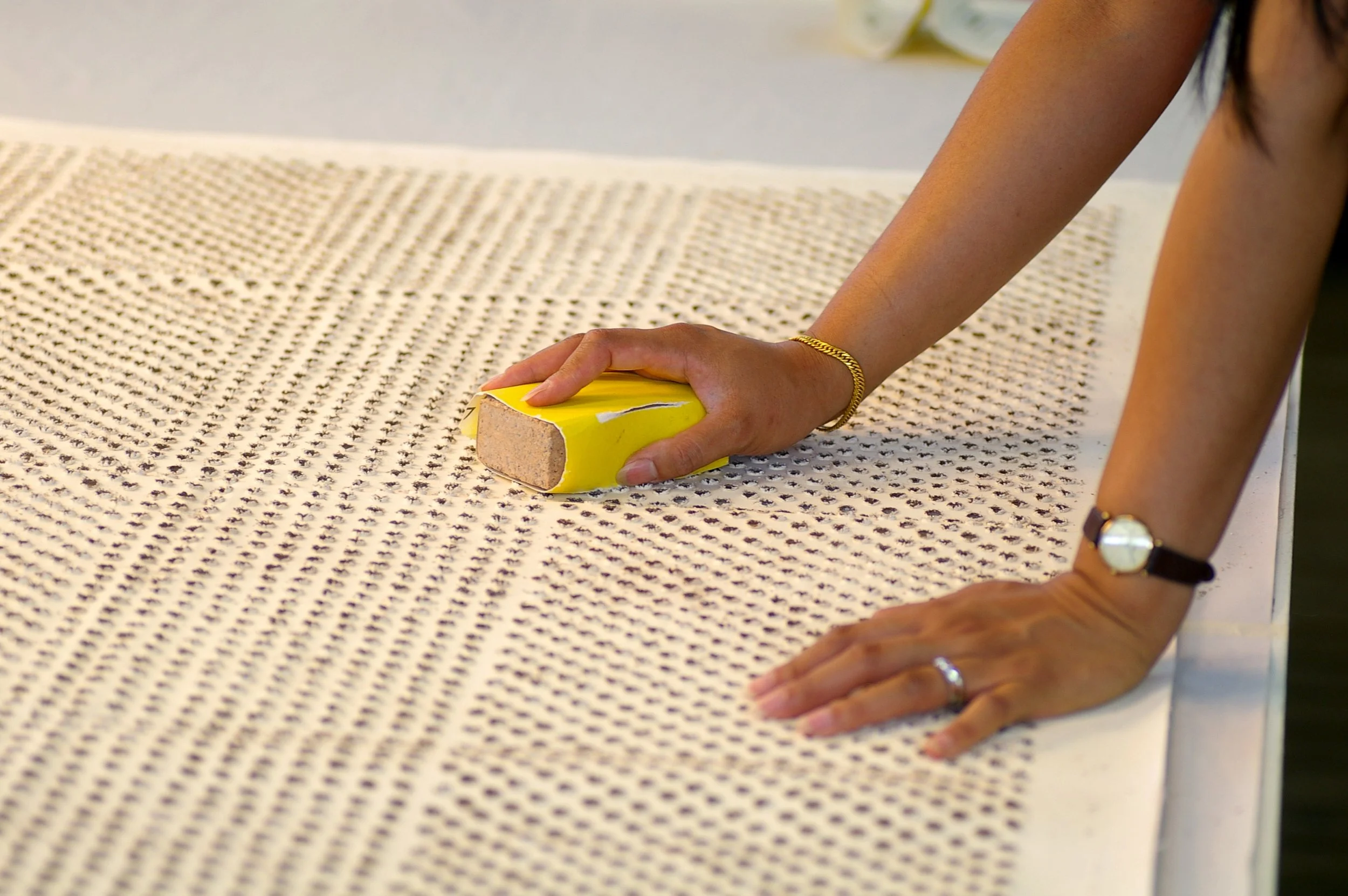
Image by Jenni Carter
SV: Yeah - he was running the class next door to me, and that’s where I met the musician Richard Johnson through Jeffree. And it turns out that Richard was a friend of my late dear friend from Malaysia.
LC: It’s a small world. Jeffree is still at M16 with us today running StudioMAP. Canberra is kind of magical like that, isn't it? It's such a small community, there are so many connections. My former boss Terence Maloon, always said that how Canberra is now is how the Sydney art scene was in the 80’s.
SV: I knew Sydney in the 80’s and it was and still is totally different to what we have in Canberra.
LC: What was your experience coming from Sydney to Canberra? I mean, you must have loved Canberra because you have stayed here ever since.
SV: My partner Ashley and I left Wedderburn (Sydney) when he got a postdoctoral position at the National University of Singapore. We lived in Singapore for almost three years, and we moved to Canberra when Ashley got a job at ANU in Anthropology. It was a bit of a culture shock coming from Singapore to Canberra. It took us a long time to get used to the fact that nothing stays open after 2pm, that was hard. We stayed on because I had a studio at M16.
LC: So, when you moved to Canberra, how long were you here before you got to the studio at M16?
SV: Not very long, maybe two or three months. My studio was really filthy when I first moved in, but the floor was hardwood. The building was used by Parkes and Wildlife before M16 took over. I had to buy industrial cleaning stuff. After a good scrub, the floor came up beautifully.
LC: I imagine it would have been so dusty all the time out there. Do you have any photos from back then?
SV: Actually, there's a book called Studio, by R. Ian Lloyd and text by John McDonald. You've probably heard of it, maybe I can find it online.
[Looking at photograph of SV’s studio online]
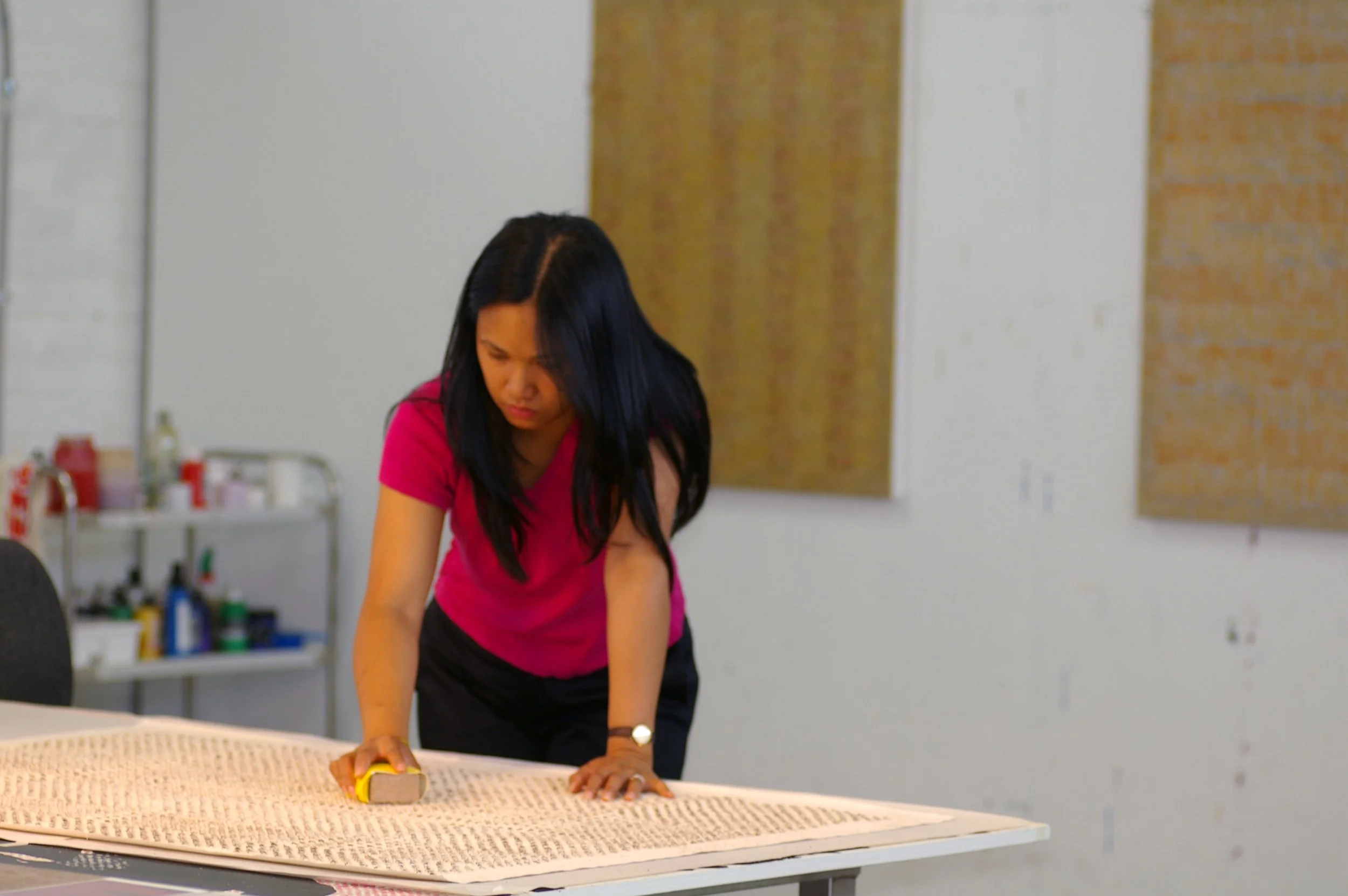
Image by Jenni Carter
LC: Oh, wow. That's so massive.
[Pointing] That was the wall they built. And John and Srebrenka were behind this wall.
LC: Do you know who took this photo?
SV: R. Ian Lloyd. Oh, that's a great shot. This here was my working wall. I had a couch there, so essential in a studio! I used to hang my brushes on the pipe on the other wall.
LC: That's a beautiful photo.
LC: So how old were you there [in the photo]?
SV: I was 33.
LC: I think taking on a big studio like that is a testament to your ambition at the time. For a young 33-year-old to be in a big studio like this, it's incredibly ambitious.
SV: Yeah, it was. It changed my life, it changed everything. It's amazing how a studio space leads you to make work at a scale that you would never have thought possible. I made Floating Words for the Sydney Biennale. It's because of that space that I was able to make a work that was eight meters long. Subsequently, seeing Floating Words somewhere else never quite lived up to seeing it in the studio because of the light. There was a lot of natural light.
LC: It just goes to show how vital having an external studio space is to an artist. And what a difference it can make to your practice. I think it can really take things to the next level once you get out of a domestic setting.
SV: Oh, absolutely, if you can do it. It's becoming harder for younger artists to be able to do that, and for me it was just dumb luck, really. I don't know what I would have done if I had a smartphone. What do you think I would have done if I wasn’t driving around that day? (laughs)
LC: It's like your story of finding the place was by fate!
